




Navigating the Tropical Monsoon: Correlation Between Moisture Penetration and Core Water Absorption in ACP
2026-03-26
.gtr-container-acp789 {
font-family: Verdana, Helvetica, "Times New Roman", Arial, sans-serif;
color: #333;
line-height: 1.6;
padding: 16px;
max-width: 100%;
box-sizing: border-box;
}
.gtr-container-acp789 p {
margin-bottom: 1em;
text-align: left !important;
font-size: 14px;
word-break: normal;
overflow-wrap: normal;
}
.gtr-container-acp789 .gtr-title {
font-size: 18px;
font-weight: bold;
color: #0000FF;
margin-bottom: 1.5em;
text-align: left !important;
}
.gtr-container-acp789 .gtr-subtitle {
font-size: 16px;
font-weight: bold;
color: #333;
margin-top: 2em;
margin-bottom: 1em;
text-align: left !important;
}
.gtr-container-acp789 p strong {
font-weight: bold;
color: #0000FF;
}
.gtr-container-acp789 ul {
list-style: none !important;
padding-left: 25px;
margin-bottom: 1em;
}
.gtr-container-acp789 ul li {
position: relative;
margin-bottom: 0.5em;
padding-left: 10px;
font-size: 14px;
text-align: left !important;
list-style: none !important;
}
.gtr-container-acp789 ul li::before {
content: "•" !important;
color: #0000FF;
position: absolute !important;
left: 0 !important;
font-size: 1.2em;
line-height: 1;
}
.gtr-container-acp789 ul li p {
margin: 0;
text-align: left !important;
font-size: 14px;
list-style: none !important;
}
@media (min-width: 768px) {
.gtr-container-acp789 {
padding: 24px 32px;
max-width: 960px;
margin: 0 auto;
}
.gtr-container-acp789 .gtr-title {
font-size: 20px;
}
.gtr-container-acp789 .gtr-subtitle {
font-size: 18px;
}
}
Navigating the Tropical Monsoon: Correlation Between Moisture Penetration and Core Water Absorption in ACP
During the six-month monsoon season in Southeast Asia, building facades are exposed to alternating high humidity and heavy rainfall. For Aluminum Composite Panels (ACP), moisture penetration is a critical technical challenge affecting structural stability and long-term flatness.
The Physical Path of Moisture: Edges and Micro-cracks
During construction, ACP must undergo cutting and grooving, exposing the inner Polyethylene (PE) core. If the sealant is substandard, rainwater enters the interface through capillary action. In high-temperature tropical environments, this trapped moisture vaporizes, creating internal pressure that leads to panel bulging.
Key Metric: Core Water Absorption and Closed-cell Structure
High-quality, exterior-grade ACP must strictly control core physical parameters. According to ASTM D570, the 24-hour water absorption of premium cores should be < 0.5%. Utilizing Virgin PE or strictly filtered flame-retardant modified materials is essential. Low-end recycled materials often contain impurities that create an open-cell structure, which facilitates water retention and internal degradation. Additionally, maintaining a Peel Strength ≥ 7.0 N/mm is critical to block moisture migration along the interface.
Recommended Selection Parameters:
Core Type: FR B1 Grade (EN 13501-1)
Water Absorption: ≤ 0.5% (ASTM D570)
Alu Alloy: AA3003 (For corrosion resistance)
Coating: PVDF Kynar 500 (≥ 25 μm thickness)
Conclusion
For developers in Southeast Asia, selecting ACP with low water absorption and high peel strength effectively avoids massive replacement costs due to facade deformation. Using neutral silicone for edge protection remains the long-term solution for tropical climate resilience.
View More
Technical Insight: Optimizing High-Rise Construction Cycles with Pre-Fabricated FR ACP
2026-03-26
.gtr-container-techinsight123 {
font-family: Verdana, Helvetica, "Times New Roman", Arial, sans-serif;
color: #333;
line-height: 1.6;
padding: 15px;
box-sizing: border-box;
max-width: 100%;
overflow-x: hidden;
}
.gtr-container-techinsight123-title {
font-size: 18px;
font-weight: bold;
color: #0000FF;
margin-bottom: 20px;
text-align: left;
}
.gtr-container-techinsight123-subtitle {
font-size: 16px;
font-weight: bold;
color: #444;
margin-top: 25px;
margin-bottom: 15px;
text-align: left;
}
.gtr-container-techinsight123 p {
font-size: 14px;
margin-bottom: 15px;
text-align: left !important;
}
.gtr-container-techinsight123 strong {
color: #0000FF;
font-weight: bold;
}
.gtr-container-techinsight123 ul,
.gtr-container-techinsight123 ol {
list-style: none !important;
padding-left: 0;
margin-left: 0;
margin-bottom: 15px;
}
.gtr-container-techinsight123 ul li,
.gtr-container-techinsight123 ol li {
position: relative;
padding-left: 25px;
margin-bottom: 8px;
font-size: 14px;
line-height: 1.6;
text-align: left;
list-style: none !important;
}
.gtr-container-techinsight123 ul li::before {
content: "•" !important;
position: absolute !important;
left: 0 !important;
color: #0000FF;
font-size: 16px;
line-height: 1.6;
}
.gtr-container-techinsight123 ol {
counter-reset: list-item;
}
.gtr-container-techinsight123 ol li::before {
content: counter(list-item) "." !important;
position: absolute !important;
left: 0 !important;
color: #0000FF;
font-size: 14px;
font-weight: bold;
line-height: 1.6;
width: 20px;
text-align: right;
}
@media (min-width: 768px) {
.gtr-container-techinsight123 {
padding: 25px 40px;
}
.gtr-container-techinsight123-title {
margin-bottom: 30px;
}
.gtr-container-techinsight123-subtitle {
margin-top: 35px;
margin-bottom: 20px;
}
}
Technical Insight: Optimizing High-Rise Construction Cycles with Pre-Fabricated FR ACP
Industry Challenge: Balancing Speed and Safety in Southeast Asia
For high-rise developments across Southeast Asia, project lead times are a critical KPI for contractors. However, traditional on-site fabrication often leads to inconsistencies in fire safety and structural alignment. To meet modern building codes while maintaining tight schedules, B2B procurement is shifting toward Pre-fabricated Fire Rated Aluminum Composite Panels (FR ACP) that offer both speed and parametric reliability.
Engineering Solution: Accuracy Driven by Physical Parameters
Precision Thickness Control: With a standard thickness of 4.0mm and a strict tolerance of ±0.2mm, these panels ensure that CNC grooving remains consistent. This prevents cracking at the fold line, which is a common failure point in low-quality ACP.
High Peel Strength (≥ 10.0 N/mm): Based on ASTM D1781 standards, superior bonding between the aluminum skin and the mineral core allows for complex pre-bending in the factory without risk of delamination under high-altitude wind pressure.
Mineral Core Integrity: The flame-retardant mineral-filled core maintains its physical properties even after mechanical drilling or cutting, ensuring the fire-resistant barrier remains intact throughout the installation process.
Operational Benefit: Modular Systems and Structural Efficiency
Load Reduction: At only 60% - 70% the density of solid aluminum, FR ACP reduces the dead load on the building's primary structure, simplifying the design of the sub-framing system.
Rapid Modular Installation: By utilizing factory-prefabricated clips and a "dry-fix" mechanical fastening system, on-site labor is significantly reduced. This process is weather-independent, allowing construction to continue during Southeast Asia’s rainy seasons and shortening the total cladding period.
Conclusion: Delivering Parametric Certainty
For B2B projects, construction efficiency is the key to cost control. By selecting FR ACP that meets stringent fire safety standards and maintains minimal physical tolerances, contractors can ensure 100% compliance while accelerating project turnover.
View More
Technical Analysis: High-Performance FR ACP for High UV Tropical Environments
2026-03-26
/* Unique root container class */
.gtr-container-f7e9a2 {
font-family: Verdana, Helvetica, "Times New Roman", Arial, sans-serif;
color: #333;
line-height: 1.6;
padding: 16px; /* Mobile-first padding */
max-width: 100%; /* Ensure it doesn't overflow on small screens */
box-sizing: border-box;
}
/* General paragraph styling */
.gtr-container-f7e9a2 p {
font-size: 14px;
margin-bottom: 1em;
text-align: left !important; /* Enforce left alignment */
word-break: normal; /* Prevent breaking words */
overflow-wrap: normal; /* Prevent breaking words */
}
/* Title styling (h2 equivalent) */
.gtr-container-f7e9a2 .gtr-f7e9a2-title {
font-size: 18px; /* Max 18px for titles */
font-weight: bold;
margin-bottom: 1.5em;
color: #0000FF; /* Theme color for main title */
text-align: left !important;
}
/* Subtitle styling (h3 equivalent) */
.gtr-container-f7e9a2 .gtr-f7e9a2-subtitle {
font-size: 16px; /* Slightly smaller than main title */
font-weight: bold;
margin-top: 2em;
margin-bottom: 1em;
color: #333;
text-align: left !important;
}
/* Strong tag styling */
.gtr-container-f7e9a2 strong {
font-weight: bold;
color: #0000FF; /* Emphasize strong text with theme color */
}
/* Unordered list styling */
.gtr-container-f7e9a2 ul {
list-style: none !important; /* Remove default list style */
padding-left: 20px; /* Space for custom bullet */
margin-bottom: 1em;
}
.gtr-container-f7e9a2 ul li {
position: relative; /* For positioning the custom bullet */
margin-bottom: 0.8em;
padding-left: 15px; /* Space for the bullet */
font-size: 14px;
text-align: left !important;
list-style: none !important;
}
/* Custom bullet for unordered list */
.gtr-container-f7e9a2 ul li::before {
content: "•" !important; /* Custom bullet character */
color: #0000FF; /* Theme color for bullet */
font-size: 18px; /* Slightly larger bullet */
position: absolute !important;
left: 0 !important;
top: 0; /* Align with the top of the text */
line-height: 1.6; /* Match line-height of text */
}
/* Paragraphs inside list items - crucial for content fidelity and layout */
.gtr-container-f7e9a2 ul li p {
margin: 0 !important; /* Remove default paragraph margin */
padding: 0 !important; /* Remove default paragraph padding */
display: inline; /* Make it flow with the bullet */
font-size: 14px; /* Ensure consistent font size */
text-align: left !important;
list-style: none !important;
}
/* Responsive adjustments for PC screens */
@media (min-width: 768px) {
.gtr-container-f7e9a2 {
padding: 24px 40px; /* More padding on larger screens */
max-width: 960px; /* Max width for better readability on large screens */
margin: 0 auto; /* Center the component */
}
.gtr-container-f7e9a2 .gtr-f7e9a2-title {
font-size: 18px; /* Adjusted to strictly adhere to max 18px */
}
.gtr-container-f7e9a2 .gtr-f7e9a2-subtitle {
font-size: 18px; /* Slightly larger subtitle on PC */
}
.gtr-container-f7e9a2 p {
margin-bottom: 1.2em;
}
.gtr-container-f7e9a2 ul {
padding-left: 25px; /* Adjust padding for PC */
}
.gtr-container-f7e9a2 ul li {
padding-left: 20px; /* Adjust padding for PC */
}
}
Technical Analysis: High-Performance FR ACP for High UV Tropical Environments
Industry Challenge: Why Façades Fail in Southeast Asia
In tropical regions (Southeast Asia, Middle East), building façades face a "double threat": Extreme UV Index (>10) and High Humidity. For commercial projects, using standard ACP often leads to severe chalking and fading within 3-5 years. This degradation not only ruins the building's aesthetics but also exposes the aluminum skin to premature corrosion.
The Solution: Kynar 500® PVDF Coating Technology
To ensure a 20-year lifespan, professional grade Aluminum Composite Panels (ACP) must utilize a PVDF (Polyvinylidene Fluoride) coating system. The stability is derived from the Carbon-Fluorine (C-F) bond, which provides superior resistance to photochemical breakdown.
Key Technical Specifications for Procurement
For B2B buyers and contractors, the following parametric data is essential to ensure long-term material consistency:
Resin Content: Must contain ≥ 70% PVDF resin (Kynar 500/Hylar 5000) for maximum UV defense.
Coating Thickness: Total Dry Film Thickness (DFT) must be 25μm - 30μm (2-coat or 3-coat system).
Chalking Resistance: Rated 8 or higher (per ASTM D4214) after 4,000 hours of accelerated weathering.
Gloss Retention: Maintains >80% of initial gloss after 10 years (per ASTM D523).
180° Peel Strength: Reaches ≥ 10.0 N/mm (per ASTM D1781), ensuring no delamination even when surface temperatures reach 80°C.
For bulk inquiries and ASTM Test Reports, please contact our technical team today.
Conclusion: Selection Guide for High-Rise Projects
When sourcing for high-rise developments, contractors should prioritize suppliers offering ASTM E84 Class A fire certification paired with a 20-year PVDF warranty. Verifying these specific parameters (25μm DFT and 70% resin) is the most effective way to mitigate future maintenance overheads and ensure structural safety.
View More
How to Prevent ACP Bulging and Delamination in Southeast Asia: Enhancing Peel Strength
2026-03-25
.gtr-container-acp789 {
font-family: Verdana, Helvetica, "Times New Roman", Arial, sans-serif;
color: #333;
line-height: 1.6;
padding: 15px;
max-width: 960px;
margin: 0 auto;
box-sizing: border-box;
}
.gtr-container-acp789 * {
box-sizing: border-box;
}
.gtr-container-acp789 .gtr-title {
font-size: 18px;
font-weight: bold;
margin-bottom: 15px;
color: #0000FF;
text-align: left;
}
.gtr-container-acp789 .gtr-section-title {
font-size: 18px;
font-weight: bold;
margin-top: 30px;
margin-bottom: 15px;
color: #0000FF;
text-align: left;
}
.gtr-container-acp789 .gtr-subsection-title {
font-size: 16px;
font-weight: bold;
margin-top: 25px;
margin-bottom: 10px;
color: #0000FF;
text-align: left;
}
.gtr-container-acp789 p {
font-size: 14px;
margin-bottom: 15px;
text-align: left !important;
word-break: normal;
overflow-wrap: normal;
}
.gtr-container-acp789 strong {
font-weight: bold;
}
.gtr-container-acp789 .gtr-separator {
border: none;
border-top: 1px solid #eee;
margin: 25px 0;
}
.gtr-container-acp789 ul {
list-style: none !important;
padding: 0;
margin: 0 0 15px 0;
}
.gtr-container-acp789 ul li {
position: relative;
padding-left: 20px;
margin-bottom: 8px;
font-size: 14px;
text-align: left !important;
list-style: none !important;
}
.gtr-container-acp789 ul li::before {
content: "•" !important;
position: absolute !important;
left: 0 !important;
color: #0000FF;
font-size: 1.2em;
line-height: 1;
}
.gtr-container-acp789 ol {
list-style: none !important;
padding: 0;
margin: 0 0 15px 0;
counter-reset: list-item;
}
.gtr-container-acp789 ol li {
position: relative;
padding-left: 25px;
margin-bottom: 8px;
font-size: 14px;
text-align: left !important;
counter-increment: none;
list-style: none !important;
}
.gtr-container-acp789 ol li::before {
content: counter(list-item) "." !important;
position: absolute !important;
left: 0 !important;
color: #0000FF;
font-weight: bold;
width: 20px;
text-align: right;
line-height: 1;
}
.gtr-container-acp789 .gtr-table-wrapper {
overflow-x: auto;
margin-bottom: 20px;
}
.gtr-container-acp789 table {
width: 100%;
border-collapse: collapse !important;
border-spacing: 0 !important;
margin-bottom: 0 !important;
font-size: 14px;
word-break: normal;
overflow-wrap: normal;
}
.gtr-container-acp789 th,
.gtr-container-acp789 td {
border: 1px solid #ccc !important;
padding: 10px !important;
text-align: left !important;
vertical-align: top !important;
white-space: normal;
}
.gtr-container-acp789 th {
font-weight: bold !important;
background-color: #f0f0f0 !important;
color: #333;
}
.gtr-container-acp789 tbody tr:nth-child(even) {
background-color: #f9f9f9;
}
@media (min-width: 768px) {
.gtr-container-acp789 {
padding: 20px;
}
.gtr-container-acp789 .gtr-title {
font-size: 20px;
margin-bottom: 20px;
}
.gtr-container-acp789 .gtr-section-title {
font-size: 18px;
margin-top: 40px;
margin-bottom: 20px;
}
.gtr-container-acp789 .gtr-subsection-title {
font-size: 16px;
margin-top: 30px;
margin-bottom: 15px;
}
.gtr-container-acp789 p {
margin-bottom: 18px;
}
.gtr-container-acp789 ul li,
.gtr-container-acp789 ol li {
margin-bottom: 10px;
}
.gtr-container-acp789 .gtr-table-wrapper {
overflow-x: visible;
}
.gtr-container-acp789 table {
width: 100%;
}
}
Analyzing ACP Bulging in Southeast Asia: Preventing Delamination via Enhanced Peel Strength
In the construction industry of Southeast Asia (such as Vietnam, Thailand, and Indonesia), "bulging" and "delamination" of Aluminum Composite Panels (ACP) are the primary issues affecting facade longevity. This technical insight analyzes the decisive role of Peel Strength under extreme humidity and high-temperature conditions.
The Cause of Bulging: Coupling of High Humidity and Thermal Expansion
In tropical climates where the average daily humidity often exceeds 80%, moisture easily penetrates through panel edges, joints, or improper routed folds. If the lamination process is substandard, moisture ingress compromises the interface between the aluminum skin and the Polyethylene (PE) core.
Physical Expansion: The core material absorbs trace amounts of moisture and expands slightly, generating internal stress.
Adhesion Failure: Direct sunlight causes the aluminum skin temperature to rise (often exceeding 70°C). A low-quality adhesive layer (polymer film) loses its bonding strength under such heat, eventually leading to the separation of the aluminum layer from the core, resulting in visual "bubbles" or bulging.
Technical Core: The Importance of Peel Strength ≥ 7.0 N/mm
To withstand these harsh environmental conditions, the core technical indicator for B2B procurement is the 180° Peel Strength. According to GB/T 17748 or ASTM D903 standards, high-quality 3mm or 4mm ACP intended for durable projects must maintain a peel strength above 7.0 - 9.0 N/mm.
Polymer Film Technology: High-performance, Dupont-grade polymer adhesive resins are essential to ensure chemical bonding remains intact during 80°C thermal cycles.
Data-Driven Reliability: Experimental data shows that when peel strength is below 5.0 N/mm, the probability of delamination significantly increases after only 50 hygrothermal cycles. Ensuring a higher initial parameter acts as a safety buffer against tropical weathering.
Selection Guide for the Southeast Asian Market
To ensure long-term engineering stability, procurement officers and contractors should follow these parameter benchmarks:
Key Parameters
Recommended Specs
Function
Alu-Thickness
≥ 0.21 mm (Exterior Grade)
Provides sufficient tensile strength to resist thermal deformation.
Core Material
Fire-retardant B1 Grade
Lower thermal expansion coefficient and enhanced fire safety.
Edge Treatment
Neutral Silicone Sealant
The first line of defense to block lateral moisture penetration.
Coating Type
PVDF (for Exterior)
High UV resistance to prevent surface chalking and fading.
For Sustainable Engineering:
Prioritize 3003 Series Alloy: Compared to the 1100 series, AA3003 aluminum alloy offers higher manganese content, providing significantly better corrosion resistance and structural stability in humid coastal areas.
Verify Batch Consistency: Ensure every batch undergoes the "Boiling Water Test" (2 hours at 100°C) without any signs of bubbling, coating loss, or delamination before site approval.
Conclusion: Reducing Maintenance Costs at the Source
In the Southeast Asian market, the cost of post-installation renovation due to cheap, low-grade ACP is often 3-5 times the initial material procurement cost. By strictly controlling technical parameters—specifically Peel Strength, Alloy Grade, and Coating Thickness—developers can effectively eliminate physical failures caused by environmental stress.
View More
High-Quality Aluminum Composite Panels: The Ideal Building Solution for Malaysia's East Coast Economic Region
2026-03-24
.gtr-container-a1b2c3d4 {
font-family: Verdana, Helvetica, "Times New Roman", Arial, sans-serif;
color: #333;
padding: 20px;
line-height: 1.6;
max-width: 100%;
box-sizing: border-box;
}
.gtr-container-a1b2c3d4-paragraph {
font-size: 14px;
margin-bottom: 1em;
text-align: left !important;
line-height: 1.6;
}
.gtr-container-a1b2c3d4-heading {
font-size: 18px;
font-weight: bold;
color: #0000FF;
margin-top: 1.5em;
margin-bottom: 1em;
text-align: left;
}
.gtr-container-a1b2c3d4-ordered-list,
.gtr-container-a1b2c3d4-unordered-list {
margin: 1em 0;
padding: 0;
list-style: none !important;
}
.gtr-container-a1b2c3d4-ordered-list {
counter-reset: list-item;
}
.gtr-container-a1b2c3d4-list-item {
font-size: 14px;
margin-bottom: 0.8em;
padding-left: 25px;
position: relative;
text-align: left;
line-height: 1.6;
}
.gtr-container-a1b2c3d4-ordered-list .gtr-container-a1b2c3d4-list-item::before {
content: counter(list-item) "." !important;
position: absolute !important;
left: 0 !important;
color: #0000FF;
font-weight: bold;
width: 20px;
text-align: right;
margin-right: 5px;
}
.gtr-container-a1b2c3d4-unordered-list .gtr-container-a1b2c3d4-list-item::before {
content: "•" !important;
position: absolute !important;
left: 0 !important;
color: #0000FF;
font-size: 1.2em;
line-height: 1;
top: 0.1em;
}
.gtr-container-a1b2c3d4-list-item strong {
font-weight: bold;
color: #0000FF;
}
.gtr-container-a1b2c3d4-hashtags {
font-size: 14px;
margin-top: 2em;
text-align: left !important;
color: #555;
}
@media (min-width: 768px) {
.gtr-container-a1b2c3d4 {
padding: 30px 50px;
}
.gtr-container-a1b2c3d4-heading {
font-size: 20px;
}
.gtr-container-a1b2c3d4-paragraph,
.gtr-container-a1b2c3d4-list-item,
.gtr-container-a1b2c3d4-hashtags {
font-size: 15px;
}
}
As Malaysia's East Coast Economic Region continues to witness rapid infrastructure and real estate development, the demand for high-performance, cost-effective building materials is growing stronger than ever. As a leading global manufacturer of aluminum composite panels (ACP sheets), we are proud to supply premium ACP solutions to support construction boom, delivering durable, sustainable, and aesthetically pleasing building materials for projects across Peninsular Malaysia.
Why ACP Panels Are Perfect for Construction Projects
Aluminum composite panels (ACP) are the top choice for modern building facades, interior decoration, and signage, offering unmatched advantages for Malaysia's tropical climate and ECER's development goals:
Superior Durability & Weather Resistance: Our PVDF-coated ACP sheets are UV-resistant, corrosion-proof, and able to withstand Malaysia's high humidity, heavy rain, and intense sunlight, ensuring long-term performance for exterior building facades.
Fire Safety Compliance: All our ACP panels meet international fire safety standards (Class A/B1 fire rating), fully complying with Malaysia's building codes, making them ideal for commercial, residential, and public infrastructure projects.
Cost-Effective & Lightweight: ACP panels are 70% lighter than solid aluminum, reducing construction costs and installation time, while offering a premium modern aesthetic at a fraction of the cost of traditional building materials.
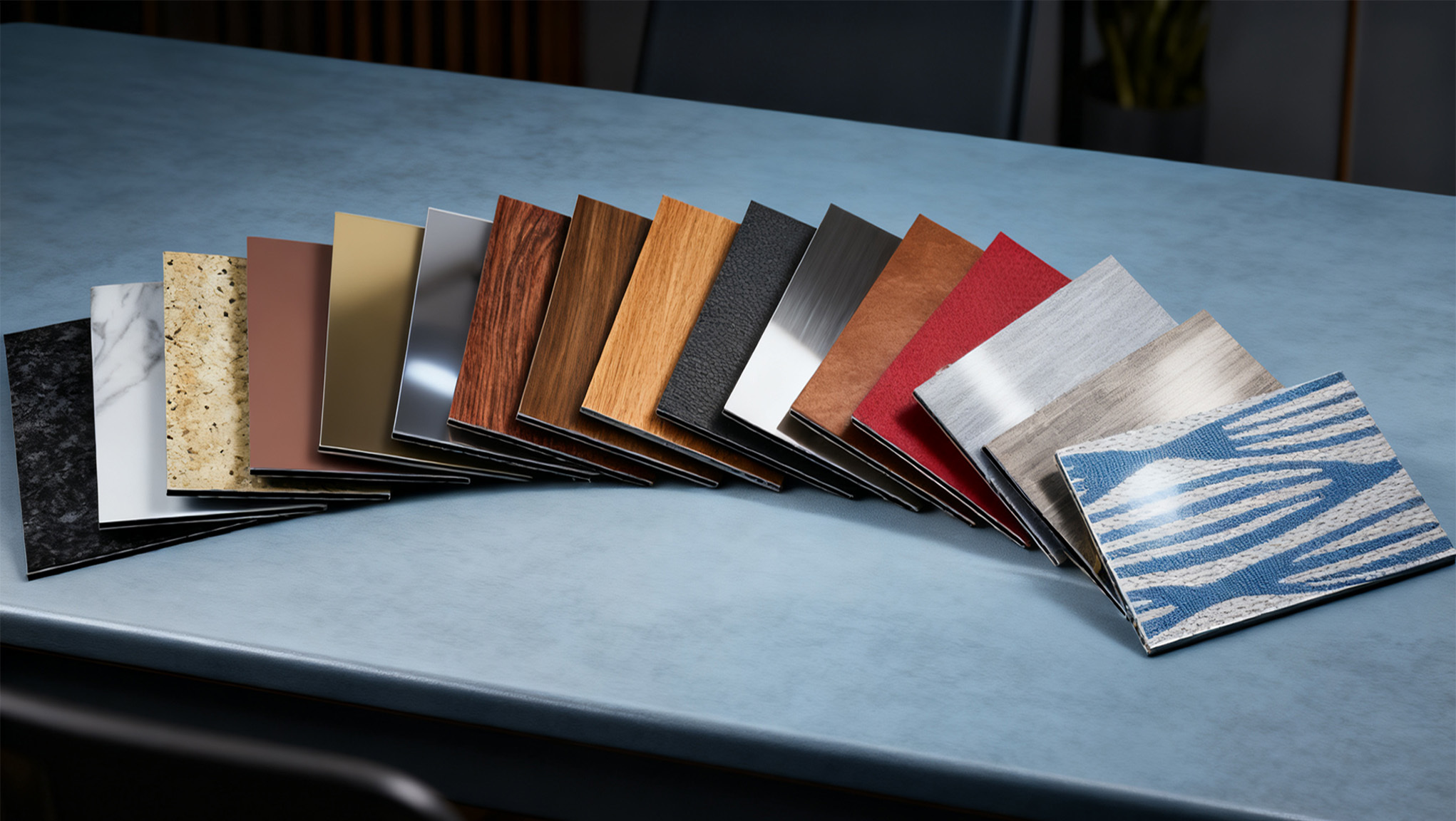
Customizable & Versatile: We offer a wide range of colors, finishes, and sizes, including nano self-cleaning, mirror, and wood-grain ACP sheets, to meet the diverse design needs of residential, commercial, and industrial projects.
Sustainable & Eco-Friendly: Our ACP panels are 100% recyclable, aligning with sustainable development goals and Malaysia's carbon neutrality commitments.
Our Commitment to Malaysian Businesses
As a trusted ACP supplier to Malaysia, we are dedicated to supporting economic growth by:
Supplying factory-direct ACP sheets at competitive prices, eliminating middleman costs for local contractors, distributors, and developers.
Providing fast, reliable delivery to Port Klang and al states (Pahang, Terengganu, Kelantan, Johor), with flexible MOQ to meet project needs.
Offering professional technical support, installation guidance, and after-sales service for all projects.
Partnering with local Malaysian businesses to drive the development of the region's construction industry.
Get in Touch
Whether you are a contractor working on an infrastructure project, a developer building a new residential complex, or a distributor looking for a reliable ACP supplier, we are here to help. Contact us today for a free quote, free sample, and customized ACP solution for your project.
#AluminumCompositePanel #ACPSheet #ECERMalaysia #MalaysiaConstruction #BuildingMaterials #ACPManufacturer
View More